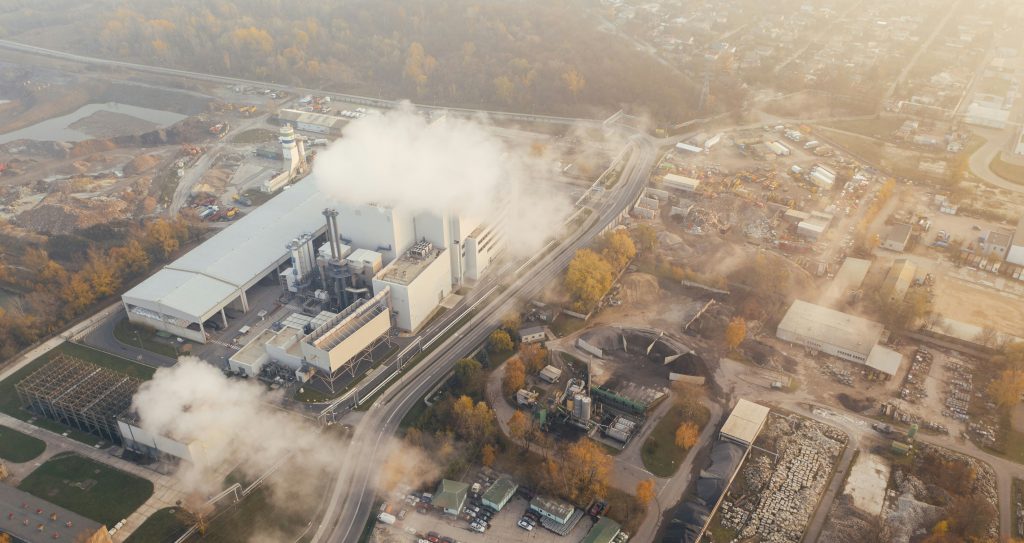
The necessity for an urgent energy transition to mitigate the effects of climate change is underscored by the fact that several planetary boundaries, including those pertaining to biosphere integrity and land-system change, have been exceeded, due to current production systems, particularly energy systems. It is therefore important to restructure energy systems configuration to mitigate their contribution to environmental impacts. However, this energy system changes to mitigate one prominent environmental impact, such as climate change, may result in the transfer of environmental burdens to other areas of concern or activities across the value chain. The main purpose of this research proposal is to incorporate both a life cycle thinking and absolute sustainability indicators into energy planning and forecasting tools to steer a net-zero and sustainable energy transition.
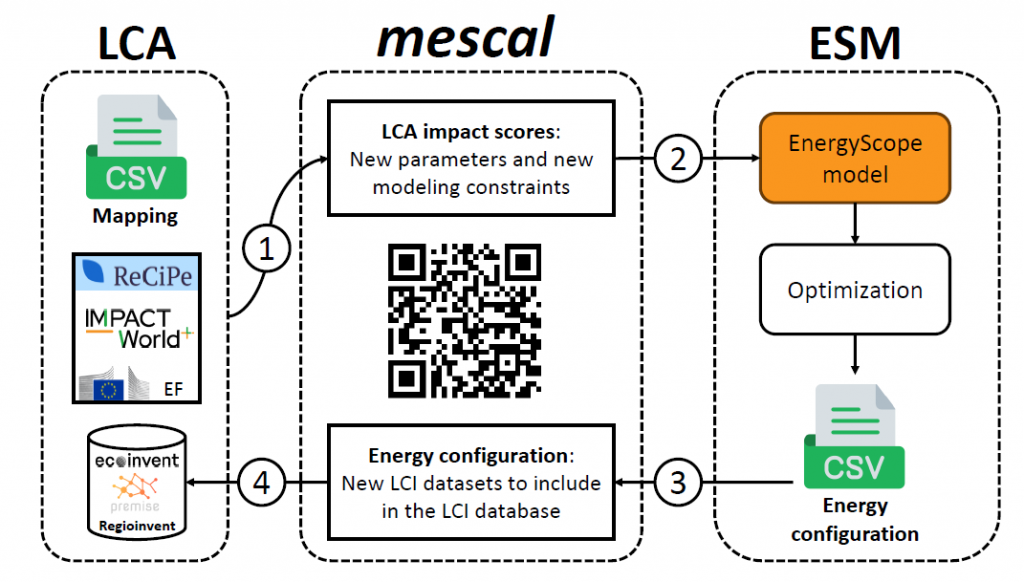
The objective of my doctoral research is to systematically integrate Life Cycle Inventories (LCI) data into Energy System Models (ESM). To do so, Matthieu developed an open-source Python package, named mescal. This tool is applied to EnergyScope, an open-source energy planning tool designed to generate energy transition scenarios through multi-objective modeling (economic, environmental) under constraints of resource availability and to satisfy the demands in energy services such as electricity, heat, and mobility of a given territory. The integration of LCI data into EnergyScope facilitates the design of an optimal configuration of an energy system by accounting for emissions of thousands of substances contributing to multiple impact categories along the life cycle of technologies. The energy system of the province of Québec is employed as a case study with the goal of assessing the role of hydrogen and biomass within Québec’s energy system transition. EnergyScope has first been enhanced with the integration of current sustainability metrics. Then, prospective LCA was integrated to account for technological evolution, economic cost, and environmental performance over the course of the energy transition period. The life-cycle inventories used to compute the sustainability metrics can be employed to compute the critical raw material (CRM) intensities of energy technologies. Therefore, this enables Matthieu to estimate the critical raw material requirement to ensure the transition of the Québec energy system.
This research project aims to assist decision-makers in designing a net-zero and sustainable energy transition by accounting for a comprehensive set of prospective life-cycle indicators.
To learn more: https://mescal.readthedocs.io/en/latest/
We use cookies on our website to give you the most relevant experience by remembering your preferences and repeat visits. By clicking “Accept”, you consent to the use of ALL the cookies.
This website uses cookies to improve your experience while you navigate through the website. Out of these, the cookies that are categorized as necessary are stored on your browser as they are essential for the working of basic functionalities of the website. We also use third-party cookies that help us analyze and understand how you use this website. These cookies will be stored in your browser only with your consent. You also have the option to opt-out of these cookies. But opting out of some of these cookies may affect your browsing experience.
Necessary cookies are absolutely essential for the website to function properly. This category only includes cookies that ensures basic functionalities and security features of the website. These cookies do not store any personal information.
Any cookies that may not be particularly necessary for the website to function and is used specifically to collect user personal data via analytics, ads, other embedded contents are termed as non-necessary cookies. It is mandatory to procure user consent prior to running these cookies on your website.
Your subscription could not be saved. Please try again.