Understanding the environmental footprint connecting our production and consumption patterns
POLARIIS+ is a collaborative project aimed at building a reference database on the environmental footprint of lifestyles in Canada. Grounded in a life‑cycle approach and aligned with both federal and provincial realities, the infrastructure seeks to produce credible, representative, accessible, and comparable data on Canadian consumption and production.
Led by Cécile Bulle as part of the Sustainable Consumption Chair, POLARIIS+ aims to become a Canadian reference infrastructure supporting governments, industries, and researchers, while also guiding citizens toward more sustainable lifestyles.
POLARIIS+ builds upon the Life Cycle Inventory database of consumption in Quebec developed by CIRAIG, whose food, housing, and hygiene datasets are publicly available.
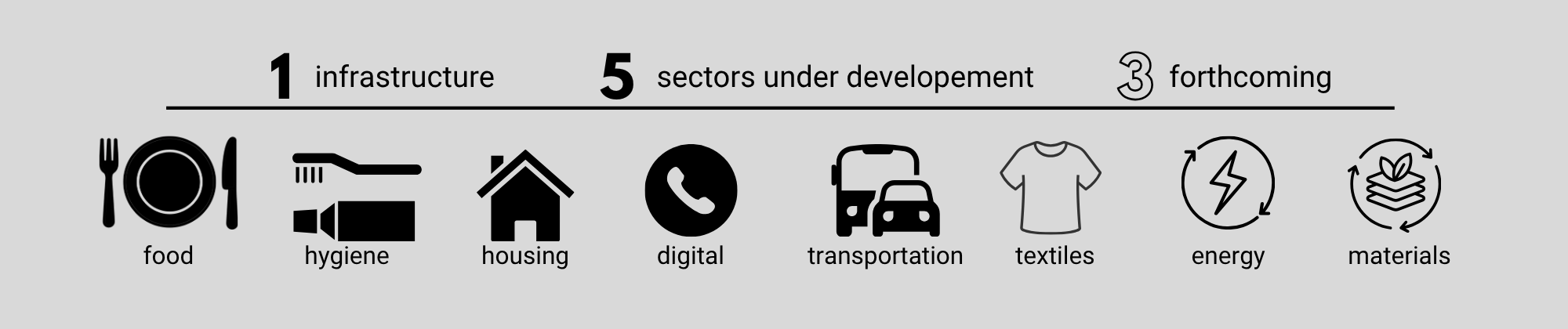
These datasets have been updated, enhanced, and incorporated into POLARIIS+, a much broader infrastructure that covers all major consumption and production sectors across Canada and its provinces.
POLARIIS+ links consumption behaviours with production chains to provide deeper insight into the environmental impacts of products, services, and lifestyles.
The data are structured, well‑documented, and regularly updated using a transparent methodology that complies with confidentiality requirements.
Data to support action
POLARIIS+ transforms life‑cycle assessment data into practical tools for decision‑making and awareness. By combining documented datasets with field data, the platform makes it possible to identify reduction opportunities, compare options, and communicate environmental impacts clearly and credibly.
Real-world applications
Thanks to the data developed in 2023, it became possible to carry out environmental display projects in food‑service settings, notably at Polytechnique Montréal and the Centre hospitalier de l’Université de Montréal (CHUM).
By calculating the carbon footprint of cafeteria meals, the initiative made environmental information more accessible to users and helped organizations improve their food offerings.
We use cookies on our website to give you the most relevant experience by remembering your preferences and repeat visits. By clicking “Accept”, you consent to the use of ALL the cookies.
This website uses cookies to improve your experience while you navigate through the website. Out of these, the cookies that are categorized as necessary are stored on your browser as they are essential for the working of basic functionalities of the website. We also use third-party cookies that help us analyze and understand how you use this website. These cookies will be stored in your browser only with your consent. You also have the option to opt-out of these cookies. But opting out of some of these cookies may affect your browsing experience.
Necessary cookies are absolutely essential for the website to function properly. This category only includes cookies that ensures basic functionalities and security features of the website. These cookies do not store any personal information.
Any cookies that may not be particularly necessary for the website to function and is used specifically to collect user personal data via analytics, ads, other embedded contents are termed as non-necessary cookies. It is mandatory to procure user consent prior to running these cookies on your website.
Your subscription could not be saved. Please try again.